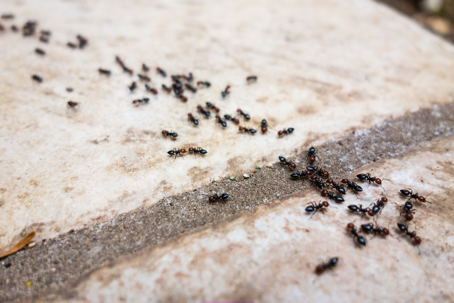
If you've ever spotted a thin line of ants along a baseboard and thought, "I'll just wipe those up later," you're not alone. Most homeowners don't get too concerned when they see a few ants in the kitchen or near a window.
The problem is that ant trails are rarely random. That line of ants is usually part of a much larger system connecting a colony to food, water, or shelter somewhere in or around your home. What looks like a minor nuisance today can become a recurring infestation if the underlying cause isn't addressed.
The good news is that ant trails often provide clues. Understanding what they're telling you can help you stop the problem before it spreads.
Why Ant Trails Appear in the First Place
Ants are constantly searching for resources. When a worker ant finds food or water, it leaves behind a chemical scent trail called a pheromone trail as it returns to the colony.
Other ants follow that trail.
As more ants successfully find the resource, the trail becomes stronger and more active. That's why a few ants on Monday can turn into a steady stream by Friday.
Inside homes, ant trails often appear:
- Along baseboards
- Around windows and doors
- Under sinks
- Near pet food
- Around garbage areas
- Across kitchen counters
The visible ants are simply the workers. The colony responsible for the activity is usually located somewhere else.
The Ants You See Are Only Part of the Problem
One of the biggest misconceptions homeowners have is that eliminating visible ants solves the issue.
In reality, worker ants are only a small percentage of the colony.
Depending on the species, the nest may be located:
- Under landscaping
- Beneath concrete slabs
- Near foundations
- Inside wall voids
- Around tree roots
- Under decks and patios
This is why ant activity often returns after homeowners spray or wipe away the trail.
The colony remains active and simply sends out more workers. Without addressing the source, the cycle continues.
Why Small Ant Problems Often Become Large Infestations
Ant colonies are designed to grow.
Once a reliable source of food or water has been identified, workers continue returning to the same location. As activity increases, the trail becomes more established and more ants are recruited.
Over time, homeowners may notice:
- More ants are appearing indoors
- Multiple trails throughout the house
- Activity in different rooms
- Larger outdoor ant populations
- Seasonal flare-ups that seem worse each year
What started as an occasional sighting can eventually become a recurring household problem.
The longer ants have access to resources, the more difficult the infestation may become to manage.
Why Summer Is Prime Time for Ant Activity
Summer is often when homeowners notice ant trails most frequently.
Warmer temperatures increase foraging activity, and outdoor conditions encourage ants to search for food and water. Backyard gatherings, outdoor dining, pet bowls, and seasonal moisture can all contribute to increased activity around the home.
Common summer attractants include:
- Food crumbs and spills
- Pet food and water bowls
- Garbage and recycling bins
- Fallen fruit
- Leaking faucets
- Irrigation systems
In Eugene and the surrounding areas, mild weather and seasonal moisture create favorable conditions for many ant species throughout the warmer months.
It's not unusual for homeowners to see a noticeable increase in ant activity during late spring and summer.
Signs You May Have More Than a Minor Ant Issue
Not every ant sighting requires professional treatment.
However, certain warning signs suggest a larger infestation may be developing.
Watch for:
- Trails that keep returning after cleaning
- Large numbers of ants indoors
- Multiple active trails
- Ants appearing daily
- Activity around structural areas of the home
- Seasonal infestations that return year after year
Recurring activity often means the colony has established a dependable route to resources inside your home.
When that happens, simply treating the ants you see is rarely enough.
What Homeowners Can Do to Reduce Ant Activity
A few simple steps can make your home less attractive to ants.
Start by focusing on sanitation and moisture control.
Helpful measures include:
- Cleaning up food spills quickly
- Storing food in sealed containers
- Emptying trash regularly
- Cleaning pet feeding areas
- Fixing small leaks
- Reducing standing water
- Trimming vegetation away from the home
It's also important to clean active ant trails thoroughly. Wiping down surfaces with soap and water helps remove the scent trails that guide other ants to the same location.
These steps can reduce activity, but they may not eliminate an established colony.
When Professional Ant Control Makes Sense
If ant trails keep returning despite your efforts, there may be a larger colony nearby that requires a more targeted approach.
Professional ant control involves more than treating visible ants. It starts with identifying the species involved, locating likely nesting areas, and determining how ants are accessing the property.
Different ant species behave differently, which is why effective treatment often depends on understanding the source of the activity rather than simply reacting to the symptoms.
Stop Ant Trails Before They Become a Bigger Problem
A few ants on the counter may not seem like a major concern, but recurring trails often indicate something larger happening behind the scenes. The sooner the source is identified, the easier it can be to prevent small issues from turning into ongoing infestations.
Ultimate Pest Control provides professional ant control services for homeowners dealing with recurring ant activity, seasonal infestations, and hard-to-find colonies.
Seeing ant trails that keep coming back? To schedule an inspection or learn more, call (541) 813-4781 or send us a message online.